 Kinesus
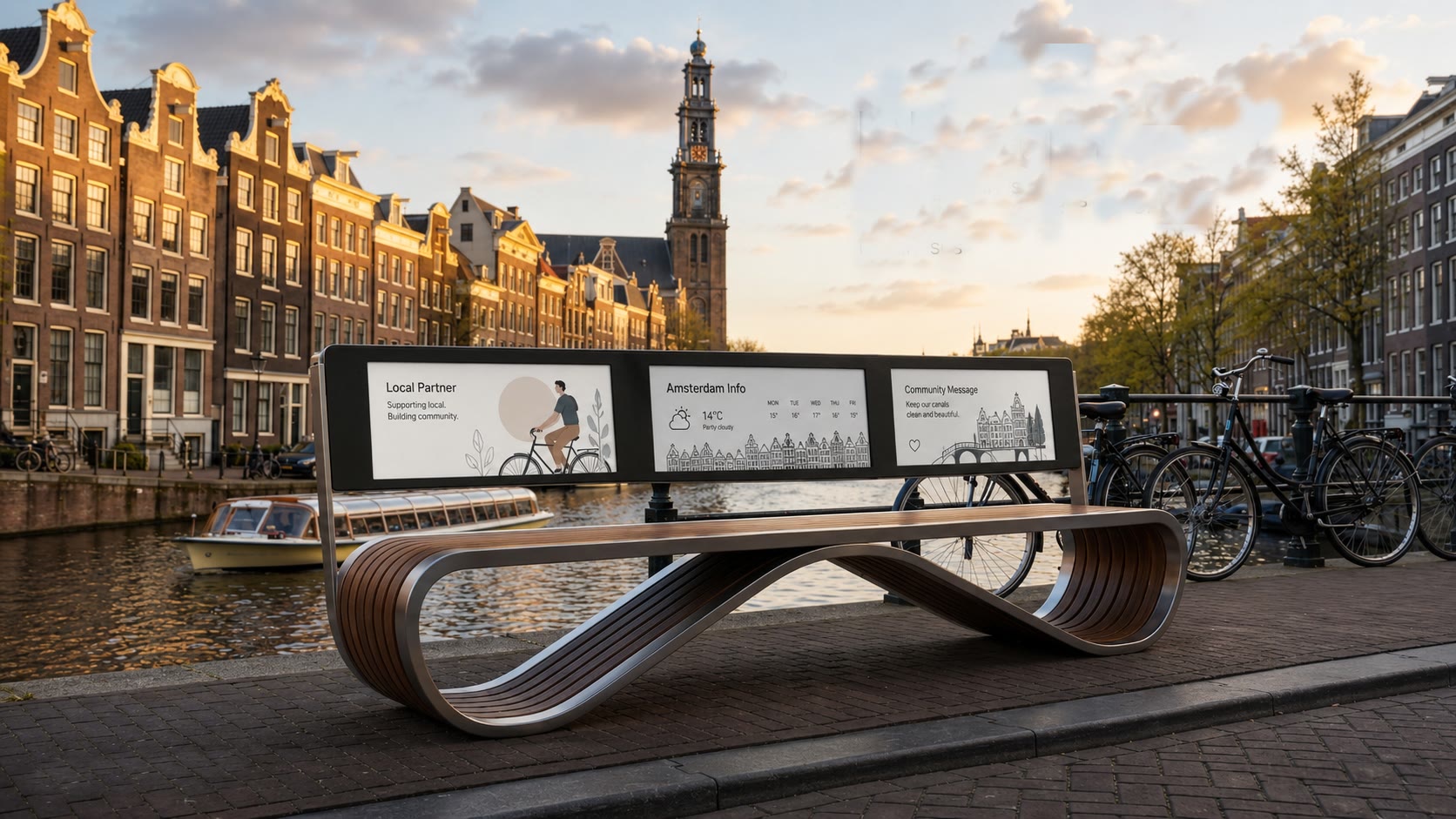
No light pollution.
Like printed paper: easy to read in full sun, and no bright screens glowing into the street at night.
A bench that becomes the street's shared screen.
BenchPad replaces paper posters and glowing billboards with calm, paper-like displays that need no power cable and no light at night.
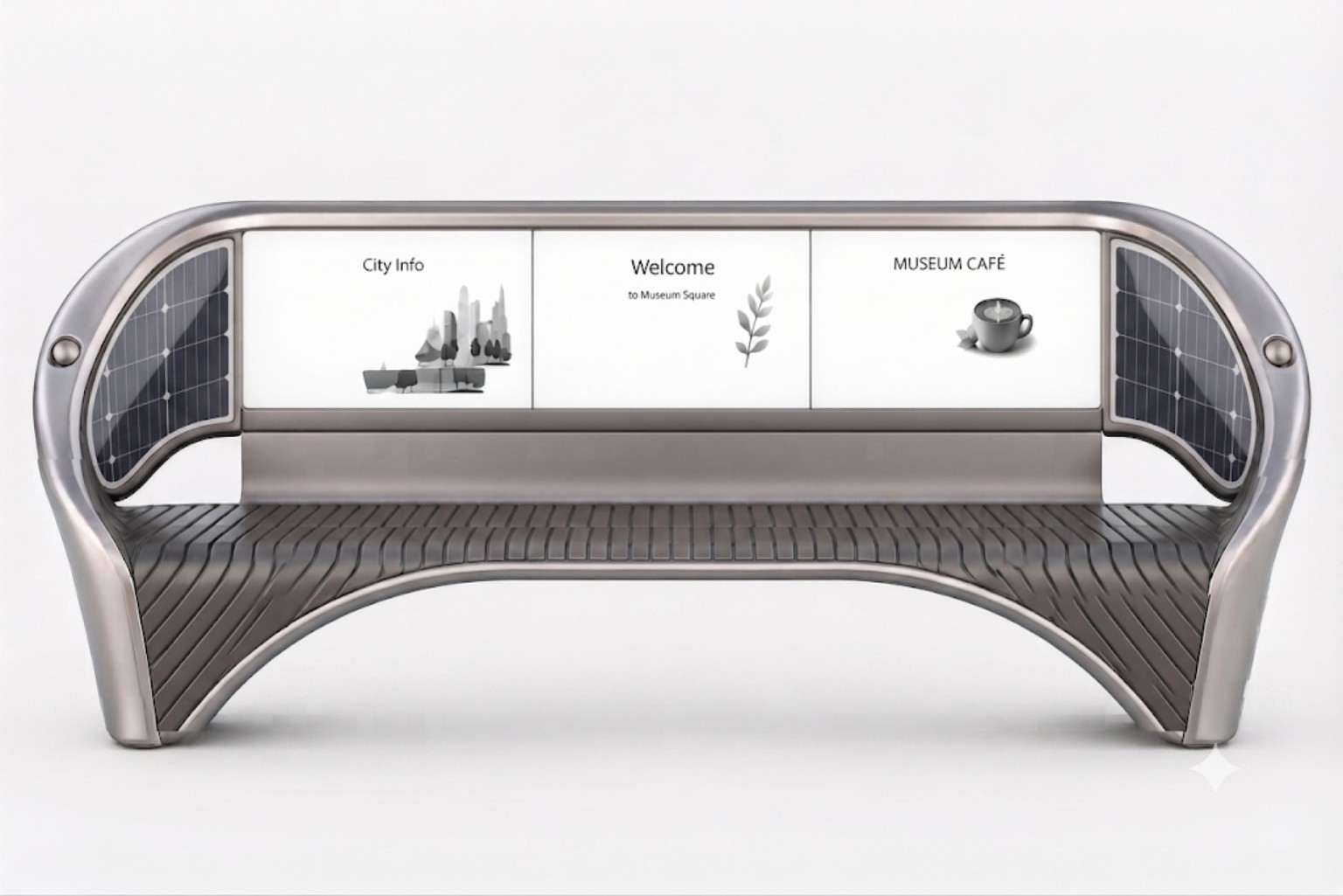
Concept render of our design target. The first full-size prototype is in development.
Send from your phone
Tap the NFC tag or scan the QR code on the bench and upload a photo or a short message.
Checked and queued
Every publication is checked and placed in a fair queue, so the screens always show appropriate content.
On the bench, with proof
The image appears on the bench and you receive a certificate confirming it was actually displayed.
Engineered for the street, not the showroom.
Every part is chosen for one goal: a bench that runs on sunlight all year, in Dutch weather.
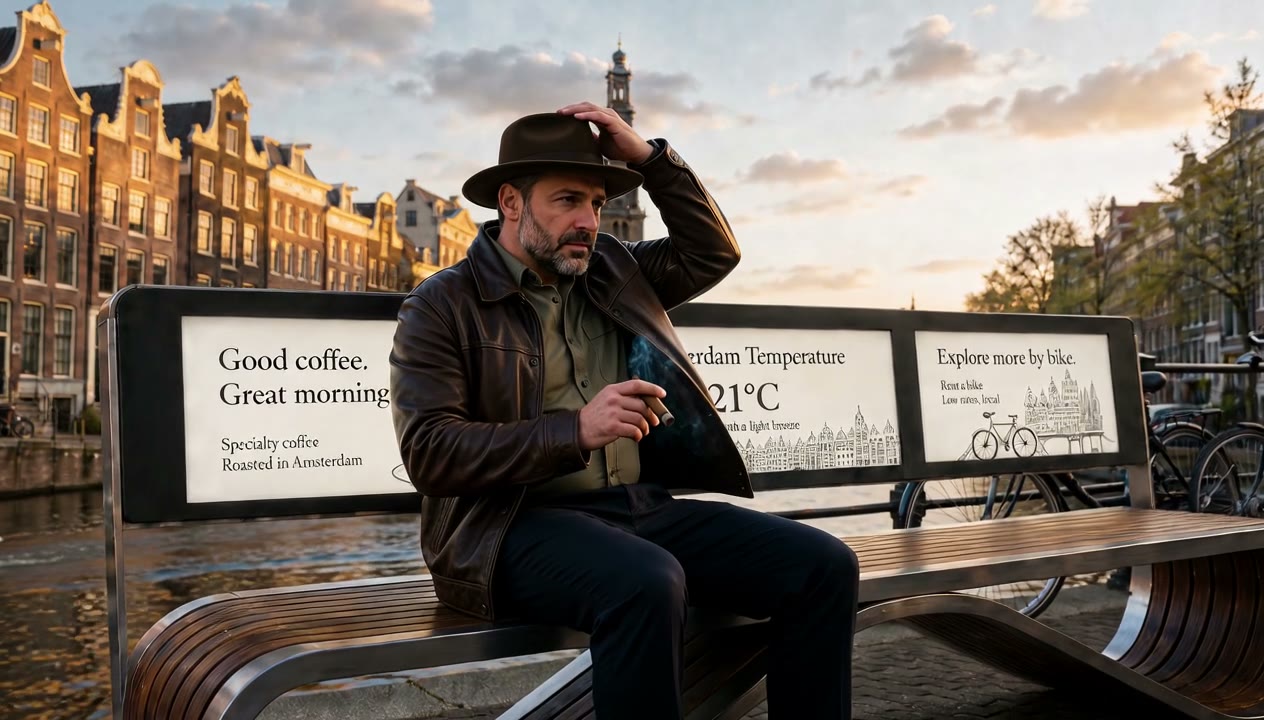
Three reflective displays
Paper-like screens that stay readable in full sun, with no backlight.
Learn more →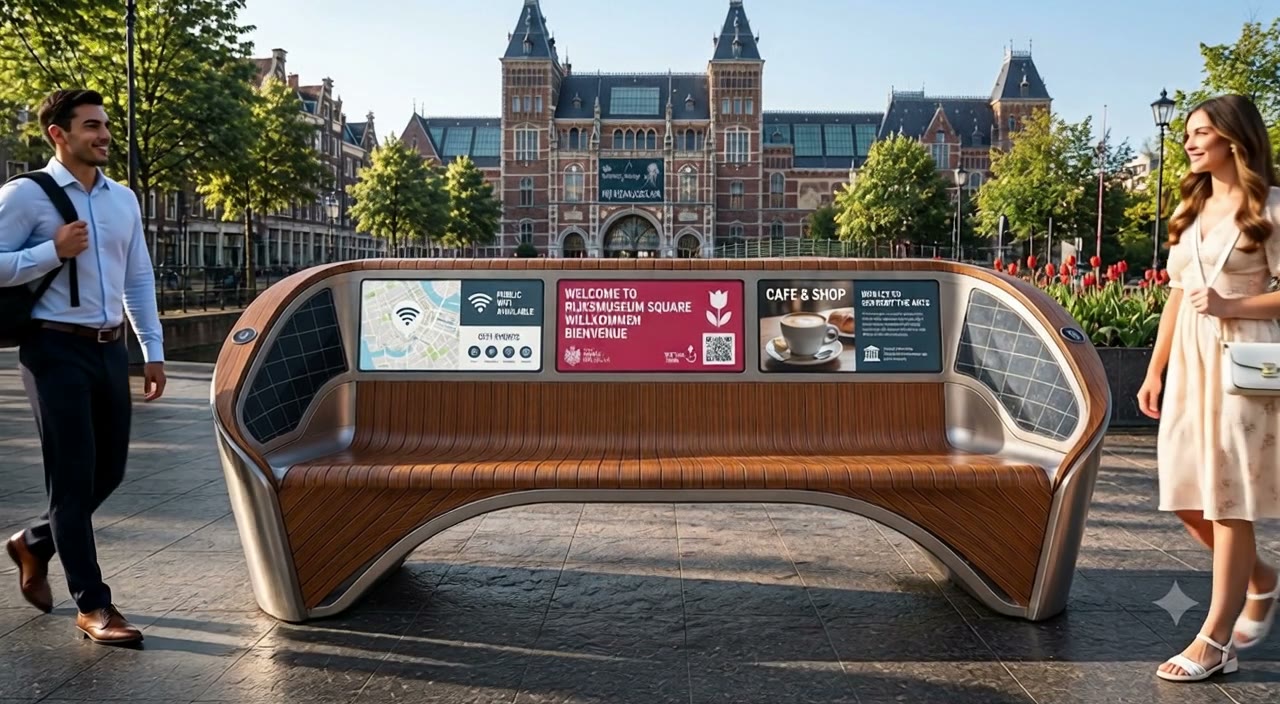
100% off-grid
Solar panels and a LiFePO4 battery: no grid connection, no digging.
Learn more →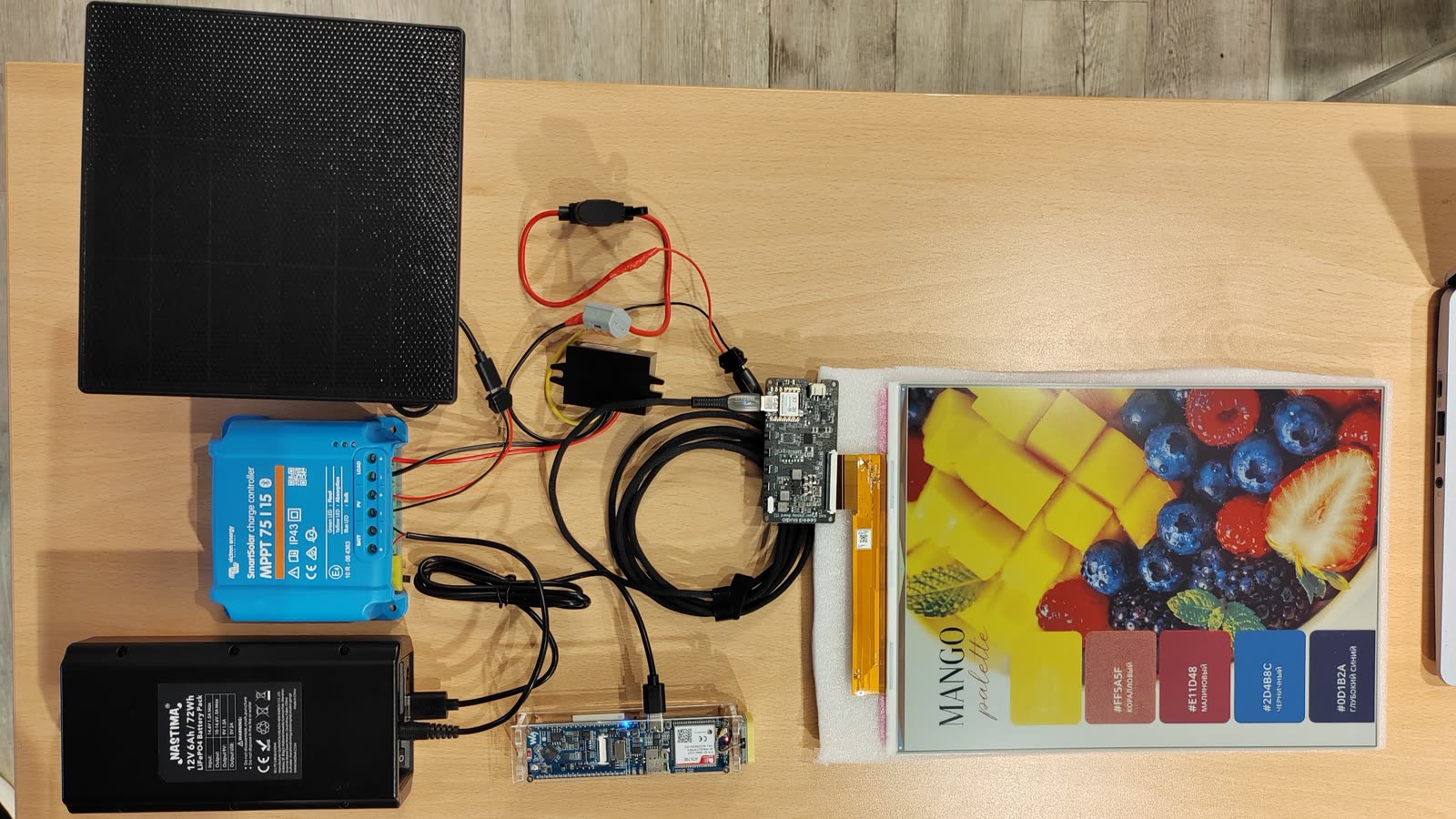 Working prototype
Electronics and connectivity
LTE-M and LoRaWAN; the electronics sleep between updates.
Learn more →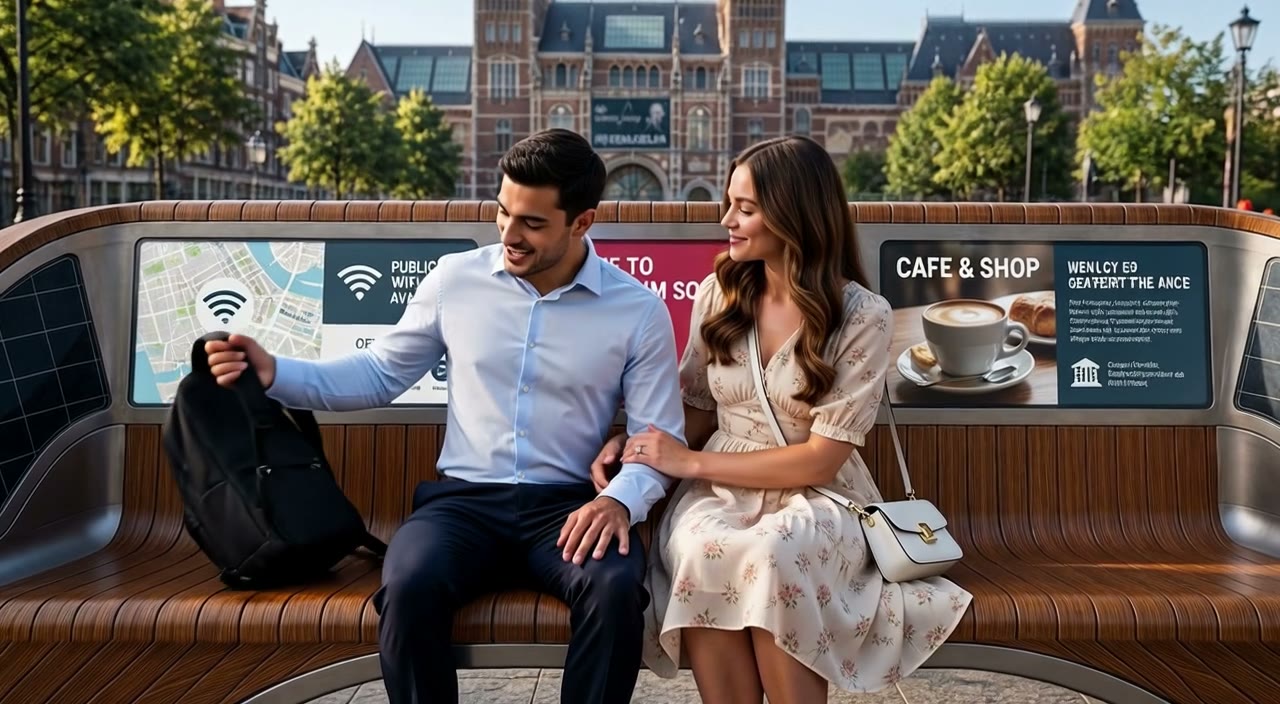
NFC and QR
One tap with a phone opens the BenchPad app with places nearby.
Learn more →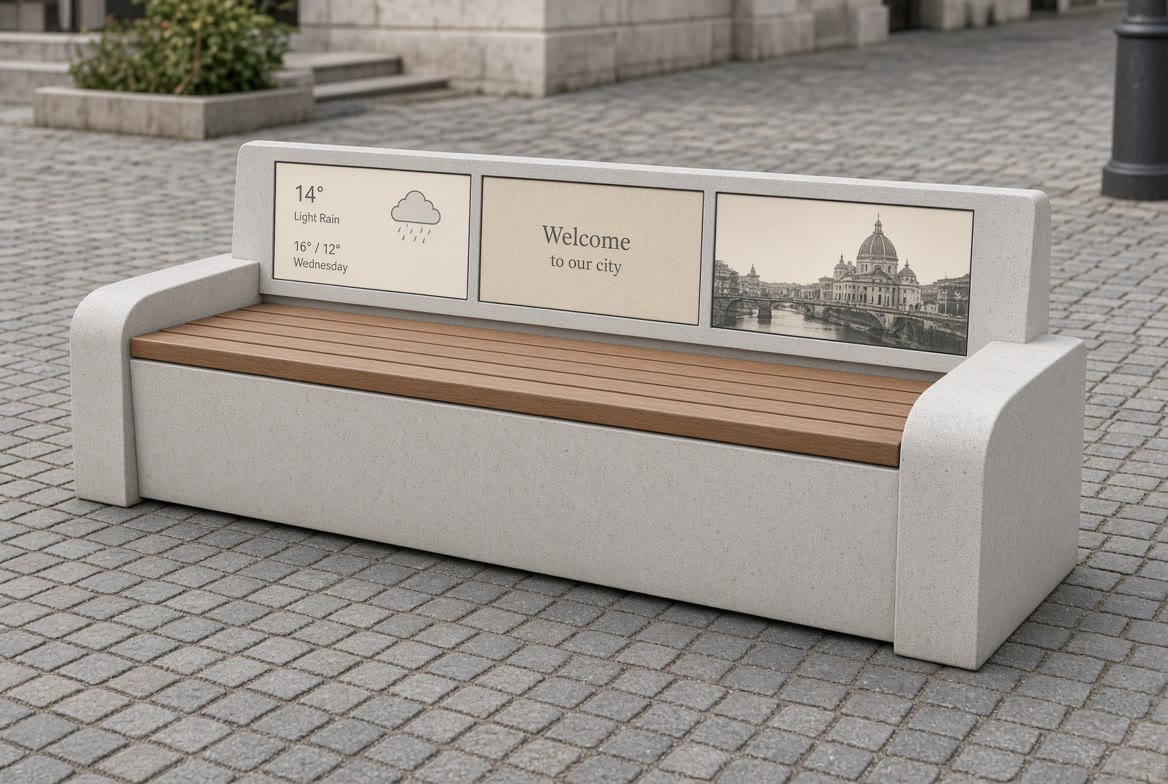
Sensors without cameras
Only anonymous environmental data. No cameras, no microphones.
Learn more →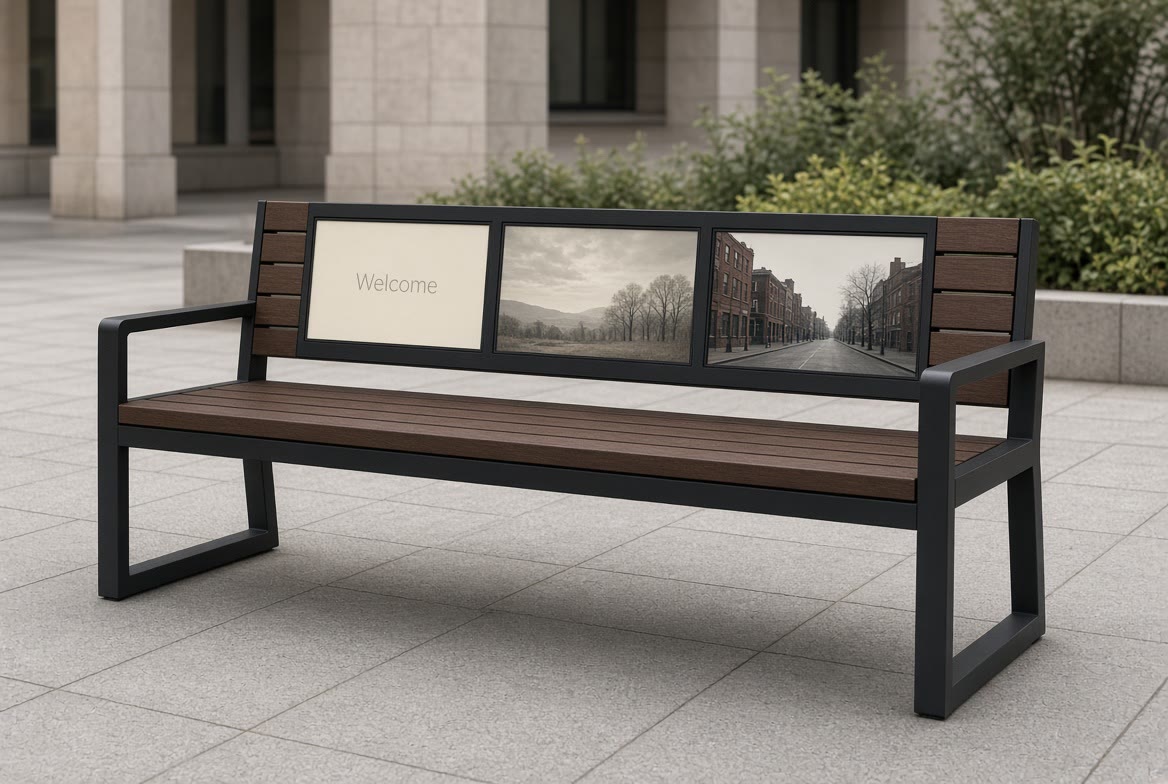
Built for the street
Impact-resistant protection and a service hatch for quick repairs.
Learn more →The system already runs.
Our electronics prototype publishes real content from real phones. The next step is the full-size bench.
- Since 13 OctLive public stream: visitors send photos from their phones and see them appear on a colour e-paper display.
- ~700 kmContent is published from Amsterdam to a display in Geneva and updates reliably.
- ProofEach publication is confirmed by the device itself before it counts as shown.
Information without glare or waste.
Cities fight two kinds of visual pollution. BenchPad avoids both.
Glowing LED screens
Bright all night, power-hungry and a source of light pollution in residential streets.
Paper posters
Printed, glued, torn and thrown away — every week again.
Concept visualisation
Built together with the city and its businesses.
Modern street furniture at no cost to the city.
- The bench, its installation and its maintenance are provided by us.
- The centre screen is offered to the municipality free of charge for news, transport, weather and warnings.
- Local businesses and horeca get an affordable way to reach people nearby.
- Optional sensors for air quality and temperature, designed in line with the AVG (GDPR).
Be found by people who are already nearby.
- Your business card in the BenchPad app, shown first to people near the bench.
- Add your logo, a short text and an offer for BenchPad users.
- Free, with no obligation.
- We review every card before it goes live.
A six-month pilot with 30 benches.
We propose a small-scale pilot in Amsterdam to show how public information can be calmer, more local and more energy-efficient.
What we measure
- Technical reliability and off-grid energy performance.
- Reach and effectiveness of municipal information.
- Feedback from residents and visitors.
- Maintenance effort and response time to reports.
What municipalities ask us.
What does BenchPad cost the municipality?
The bench, its installation and its maintenance are provided by us; the side screens are financed by local businesses. The terms of a pilot are agreed with each municipality.
Does the bench need a power connection or digging?
No. It runs on solar panels and a battery and is installed like a regular bench, without trenches for cables.
Who decides what appears on the screens?
The centre screen is for the municipality. The side screens show local businesses. Every publication is checked before it appears.
What about privacy?
No cameras, no microphones, no facial recognition. Optional sensors collect only anonymous environmental data, designed in line with the AVG (GDPR).
What if the bench is damaged?
Screens can be protected by safety glass or polycarbonate, and the electronics sit in a sealed compartment. We do the maintenance and replace modules on site. The bench reports its status, so we know when something is wrong.
Does it add light or visual clutter?
No. The displays have no backlight, show static images that change about twice a day and make no sound.
When can we start?
The full-size prototype is planned for 2027. Get in touch to discuss timing and locations for a pilot.
From working prototype to the street.
Electronics prototype
Phone-to-display publishing, queue and proof of display working end to end.
Kickstarter campaign
Funding the first full-size prototype; meetings with display manufacturers.
Full-size prototype
Compact solar power, new displays, LTE-M and LoRaWAN, street-ready housing.
Public field test
Our goal: the bench outdoors at a major design event, followed by the first city pilot.
A small Amsterdam team building calmer cities.
Kinesus Technologies is a young technology company from Amsterdam. We believe public space can become more useful without becoming louder, brighter or more intrusive.
We develop everything that makes BenchPad work ourselves: the electronics and firmware inside the bench, the BenchPad app and the platform behind it.
Calm
Static, reflective screens instead of glowing billboards.
Local
Room for the municipality and the businesses around the corner.
Private
No cameras, no microphones, no tracking.
Let's bring BenchPad to your street.
Municipalities, partners, investors and press — we'd love to hear from you.
[email protected]